Erectile Dysfunction • PDE5 Inhibitor Comparison

Sildenafil vs Vardenafil: Onset, Duration & Tolerability

Sildenafil and vardenafil are closely related PDE5 inhibitors, offering similar mechanisms but distinct performance profiles that influence real‑world use. Sildenafil typically provides a familiar 30–60‑minute onset, while vardenafil often delivers slightly faster and more consistent timing, especially in users sensitive to meal‑related delays. Their duration windows are comparable, yet vardenafil’s pharmacokinetics support more stable vascular response, enhancing perceived effectiveness during varied conditions. Timing reliability is explored in Onset & Duration, with practical strategies detailed in Timing Optimization.

Tolerability differences also matter: sildenafil is more associated with visual tint, whereas vardenafil tends to produce fewer sensory effects while maintaining strong efficacy. These nuances help users choose the option that aligns with comfort, predictability, and lifestyle needs. For a deeper look at shared and unique reactions, visit Side Effects.

Overview: Sildenafil vs Vardenafil
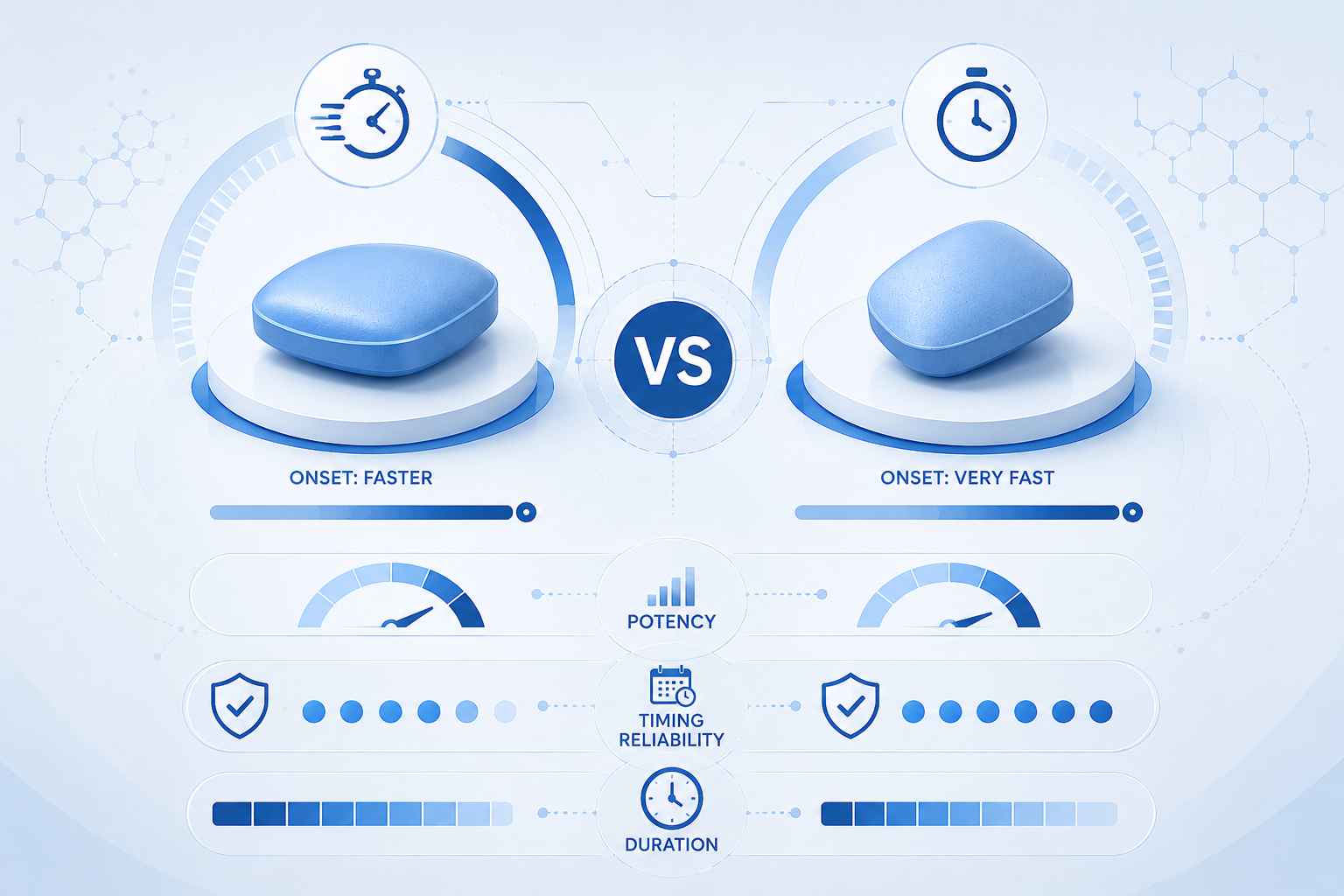
Sildenafil vs Vardenafil

Sildenafil and vardenafil are closely related PDE5 inhibitors that enhance erectile function through nitric‑oxide–mediated vasodilation. Their shared mechanism means both follow predictable absorption, distribution, and clearance patterns, further detailed in Pharmacokinetics. Despite this similarity, users often perceive vardenafil as “more potent.” This impression stems from its tighter PDE5 binding affinity and slightly more consistent onset, especially in individuals who experience variability with sildenafil. Vardenafil’s pharmacodynamic profile produces a sharper, more reliable vascular response, which can feel stronger even at comparable doses.

Food sensitivity is another key difference. Sildenafil’s absorption is significantly affected by high‑fat meals, delaying onset and reducing peak intensity. Vardenafil is less susceptible to these delays, making its timing more predictable across varied conditions. Still, sildenafil remains the most widely used PDE5 inhibitor globally due to long‑standing familiarity, broader availability, extensive clinical history, and lower cost in many markets. Its effectiveness is well‑established, and most users achieve consistent results with proper timing and dose adjustment.

Ultimately, both medications are effective, but their differences in potency perception, onset reliability, and food sensitivity shape user preference. Vardenafil appeals to those seeking tighter pharmacological precision, while sildenafil remains a trusted, accessible first‑line option with decades of clinical use.

Effectiveness Comparison: Sildenafil vs Vardenafil

Sildenafil and vardenafil deliver comparable overall effectiveness, with both medications reliably improving erectile function through PDE5 inhibition. Their shared mechanism produces similar clinical outcomes, yet subtle differences shape user perception. Vardenafil is often described as slightly “more potent,” a reputation linked to its tighter PDE5 binding affinity and more consistent onset across varied conditions. Sildenafil, however, benefits from decades of global use, extensive real‑world data, and broad familiarity among clinicians and patients. These factors contribute to its continued role as the most widely used PDE5 inhibitor.

Timing reliability also distinguishes the two. Sildenafil’s performance can fluctuate when taken after high‑fat meals, while vardenafil maintains more stable absorption and vascular response. Users who value predictable timing may prefer vardenafil, whereas those who prioritize accessibility, familiarity, and cost often choose sildenafil. These nuances are explored further in Maximize Effectiveness, where practical strategies for optimizing outcomes are discussed.

Factor Sildenafil Vardenafil
Overall effectiveness High High
Potency Moderate–high High
Timing reliability Moderate High

Onset & Duration Comparison

Sildenafil and vardenafil share similar pharmacokinetic behavior, yet their onset and duration profiles differ in ways that influence real‑world use. Sildenafil typically activates within 30–60 minutes, while vardenafil often begins working slightly faster, around 20–45 minutes. This difference is modest but meaningful for users who prioritize timing precision. Duration also varies: sildenafil provides a 4–6‑hour window, whereas vardenafil may extend slightly longer, up to 7 hours, offering a marginally broader therapeutic range.

Food sensitivity plays a major role in onset reliability. Sildenafil’s absorption is significantly affected by high‑fat meals, which can delay onset and reduce peak intensity. Vardenafil is less susceptible to these delays, maintaining more stable timing across different dietary conditions. These distinctions are further explored in Onset & Duration, where timing expectations and practical strategies are outlined.

Medication Onset Duration Food Sensitivity
Sildenafil 30–60 min 4–6 hours High
Vardenafil 20–45 min 4–7 hours Moderate

Side Effects Comparison

Sildenafil and vardenafil share a similar safety profile, but each exhibits distinct tolerability patterns that influence user preference. Sildenafil is more commonly associated with flushing, nasal congestion, and visual tint due to its interaction with retinal PDE6. These visual effects are usually mild but recognizable. Vardenafil, by contrast, tends to produce slightly more gastrointestinal sensitivity and headache, reflecting differences in enzyme selectivity and systemic response.

Vardenafil’s lower rate of visual side effects is one of its notable advantages, making it appealing to users who experience discomfort with sildenafil’s sensory changes. Practical tolerability varies by individual, and both medications remain well‑tolerated for most users. Broader safety patterns and management strategies are discussed in Side Effects, where common and rare reactions are outlined.

Side Effect Sildenafil Vardenafil
Headache Common Common
Flushing Common Less common
Nasal congestion Common Moderate
Visual tint More common Rare
GI sensitivity Moderate More common

Practical Use Differences

Practical differences between sildenafil and vardenafil often determine which medication fits a user’s routine more effectively. Sildenafil works well for individuals who prefer a familiar, widely used option and are comfortable planning around food interactions and a 30–60‑minute onset. Its shorter window suits structured, event‑based timing. Vardenafil, however, offers slightly faster and more consistent onset, especially in situations where meal timing is unpredictable. Its reduced food sensitivity and tighter PDE5 binding make it appealing for users who prioritize reliability across varied conditions.

Timing flexibility is another key factor. Vardenafil generally provides more stable performance, making it suitable for users who want predictable results without adjusting their schedule. Sildenafil remains a strong choice for those who value accessibility, cost advantages, and extensive clinical familiarity. These practical distinctions are explored further in Timing Optimization, where timing strategies and real‑world considerations are outlined.

Scenario Sildenafil Vardenafil
Need fastest onset Moderate Better
Food sensitivity High Moderate
Timing reliability Moderate High

Which One to Choose (General Guidance)

Choosing between sildenafil and vardenafil typically depends on lifestyle, timing expectations, and tolerability preferences rather than major differences in overall effectiveness. Users who prefer a shorter, event‑driven window and value broad availability often lean toward sildenafil. Its long history of use and extensive clinical data make it a familiar first‑line option. Those who prioritize more consistent onset, reduced food sensitivity, and tighter pharmacological precision may find vardenafil better suited to their needs.

Timing needs also play a central role. Individuals with predictable schedules may prefer sildenafil’s structured window, while those with variable routines often benefit from vardenafil’s steadier performance. Tolerability differences matter as well: users sensitive to visual tint may prefer vardenafil, whereas those prone to gastrointestinal discomfort may lean toward sildenafil. These non‑personalized decision factors are explored further in Dose Selection, where regimen structure and practical considerations are outlined.

Frequently Asked Questions

Sildenafil and vardenafil offer similar overall effectiveness, with both reliably improving erectile function through PDE5 inhibition. Vardenafil is sometimes perceived as slightly more potent because of its tighter enzyme binding and more consistent onset, especially in users who experience variability with sildenafil. However, sildenafil has far broader real‑world data and long‑term clinical use, which reinforces confidence in its performance. Most users respond well to either medication, with differences emerging mainly in timing and tolerability.

Vardenafil generally works slightly faster, with onset often occurring within 20–45 minutes, while sildenafil typically activates within 30–60 minutes. The difference is modest but noticeable for users who prioritize timing precision. Vardenafil’s onset also tends to be more consistent, especially when meals vary. Sildenafil remains reliable for most users, but its timing can fluctuate more depending on dietary factors and individual absorption patterns.

Both medications have similar duration ranges, but vardenafil may last slightly longer for some users. Sildenafil typically provides a 4–6‑hour window, while vardenafil can extend up to 7 hours. The difference is subtle and not comparable to long‑acting PDE5 inhibitors, but it can matter for users who want a slightly broader therapeutic window. In most cases, both offer sufficient duration for planned sexual activity.

Side effects overlap but differ in frequency. Sildenafil is more likely to cause flushing, nasal congestion, and visual tint due to its interaction with retinal enzymes. Vardenafil tends to produce slightly more gastrointestinal sensitivity and headache. Visual side effects are notably less common with vardenafil, which some users prefer. Overall, both medications are well‑tolerated, with most side effects being mild and short‑lived.

No, food affects them differently. Sildenafil is highly sensitive to high‑fat meals, which can delay onset and reduce peak intensity. This makes timing more variable when taken after heavy food. Vardenafil is less affected by meals and maintains more stable absorption across dietary conditions. Users who prefer predictable timing regardless of food intake often find vardenafil more convenient in real‑world use.

Vardenafil generally offers better timing reliability due to its reduced food sensitivity and slightly more consistent onset. Users who want predictable performance without adjusting their schedule often prefer vardenafil. Sildenafil remains highly effective but may require more attention to meal timing to achieve optimal results. For many users, both medications provide reliable outcomes with proper planning.

Users switch between these medications to find the best balance of timing, tolerability, and real‑world convenience. Some move from sildenafil to vardenafil for more consistent onset or fewer visual side effects. Others switch from vardenafil to sildenafil for broader availability, lower cost, or familiarity. Differences in food sensitivity, timing expectations, and personal comfort often guide these transitions as users refine what works best for their lifestyle.