Erectile Dysfunction • PDE5 Inhibitor

Sildenafil vs Avanafil: Onset, Duration & Tolerability

Sildenafil and avanafil are established PDE5 inhibitors, but they differ markedly in onset speed and real‑world convenience. Avanafil is the fastest‑acting option, often reaching functional onset sooner and offering a more flexible window for spontaneous activity. Sildenafil provides a longer clinical track record and dependable efficacy, though its timing is more sensitive to food intake and requires stricter optimization. Duration is comparable for most patients, while tolerability tends to be favorable with both, with avanafil showing slightly fewer food‑related fluctuations. Review pharmacokinetics in Onset & Duration, refine timing strategies in Timing Optimization, and compare safety profiles in Side Effects.

Sildenafil vs Avanafil: Clinical Overview
Sildenafil vs Avanafil

Sildenafil and avanafil are PDE5 inhibitors designed to enhance erectile function through targeted vascular smooth‑muscle relaxation. Although they share the same core mechanism, their clinical behavior differs in ways that meaningfully shape patient experience. Avanafil represents the newest generation of PDE5 therapy, engineered for rapid absorption and the fastest onset within the class, often allowing more spontaneous use. Sildenafil, by contrast, remains the most widely used option globally, supported by extensive real‑world data, multiple formulations, and decades of clinical familiarity. These distinctions influence how each agent fits into individualized treatment strategies, especially when timing flexibility is a priority.

Onset speed is the most notable difference: avanafil typically activates sooner and with fewer fluctuations related to food intake, while sildenafil’s onset is more sensitive to high‑fat meals and may require stricter timing adjustments. Tolerability profiles are broadly favorable for both, though avanafil’s streamlined pharmacokinetic design may reduce variability in certain patients. For deeper insight into absorption, metabolism, and timing behavior, see the Pharmacokinetics section, which explains how these agents differ at the level of drug handling and systemic exposure.

Onset Speed Comparison

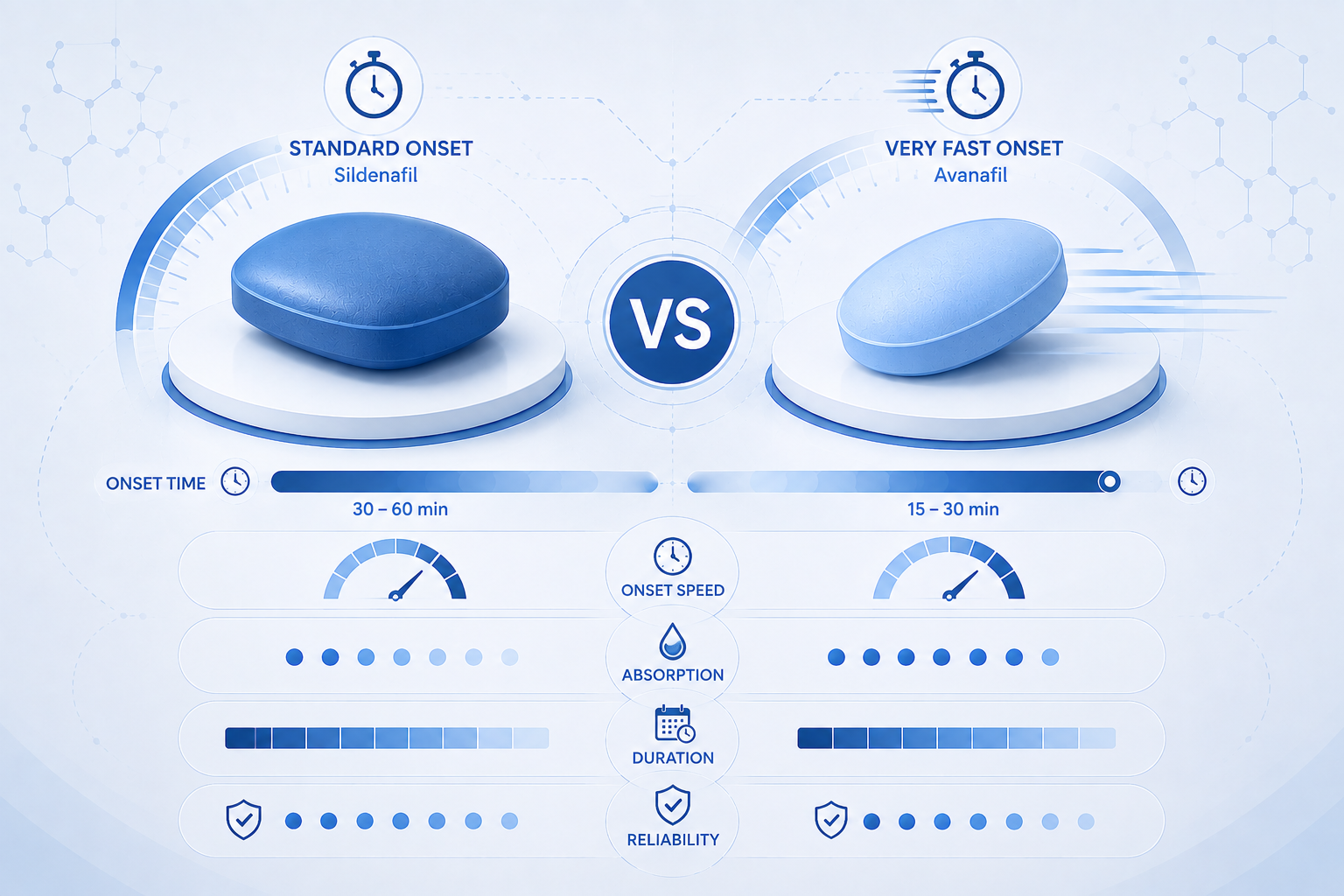
Sildenafil and avanafil share the same PDE5‑inhibition mechanism, yet their onset profiles differ sharply due to structural and pharmacokinetic distinctions. Sildenafil typically activates within 30–60 minutes, a window that can shift depending on gastric conditions and meal composition. Avanafil, by contrast, is engineered with a streamlined molecular structure that enables rapid gastrointestinal absorption and minimal first‑pass variability, producing the fastest onset in the PDE5 class—often 10–20 minutes. This difference is clinically meaningful for patients who prefer spontaneity or who struggle with timing constraints. Food sensitivity further widens the gap: sildenafil’s absorption slows significantly after high‑fat meals, while avanafil maintains more consistent uptake regardless of dietary context. For a deeper breakdown of absorption kinetics and onset behavior, see Onset & Duration.

Medication Typical Onset Food Sensitivity Notes
Sildenafil 30–60 min High Fatty meals delay onset
Avanafil 10–20 min Low Fastest onset

Duration Comparison

Although both medications provide reliable erectile support, their duration profiles show subtle but clinically relevant differences. Sildenafil generally lasts 4–6 hours, offering a defined window that suits planned sexual activity. Avanafil extends slightly longer—around 6–8 hours—due to its optimized molecular design and reduced metabolic variability. This extended duration does not match long‑acting agents like tadalafil, but it does provide a more flexible window for users who prefer less rigid scheduling. These distinctions influence timing strategies, especially for patients who want predictable coverage without committing to prolonged pharmacologic activity. For practical guidance on adjusting timing to individual routines, see Timing Optimization.

Medication Duration Notes
Sildenafil 4–6 hours Shorter window
Avanafil 6–8 hours More flexible window

Effectiveness Comparison

Sildenafil and avanafil deliver comparable overall effectiveness, with both demonstrating strong clinical outcomes across diverse patient groups. The primary differences lie not in potency but in timing reliability and real‑world consistency. Avanafil’s rapid onset and low food sensitivity make its effectiveness feel more predictable, especially for users who prefer spontaneous activity or who frequently eat high‑fat meals. Sildenafil remains highly effective but shows greater variability in timing due to its sensitivity to gastric conditions. These nuances shape practical use cases: sildenafil suits patients who value familiarity, multiple formulations, and extensive long‑term data, while avanafil appeals to those prioritizing speed and convenience. For strategies to enhance real‑world results with either medication, visit Maximize Effectiveness.

Factor Sildenafil Avanafil
Timing reliability Moderate High
Food sensitivity High Low
Flexibility Short window Moderate window

Side Effects & Tolerability Differences

Sildenafil and avanafil share a broadly similar safety profile, yet their tolerability patterns differ in ways that matter for real‑world use. Sildenafil is well known for producing flushing, nasal congestion, and occasional visual tint due to its interaction with retinal PDE6. These effects are usually mild but can be noticeable for users sensitive to visual changes. Avanafil, by contrast, demonstrates a “cleaner” tolerability profile, with fewer headaches and a significantly lower rate of visual disturbances. Its highly selective PDE5 binding reduces off‑target activity, which is why many patients perceive it as smoother and more predictable during use.

Practical tolerability often depends on how consistently a medication behaves across different conditions. Avanafil’s streamlined molecular design minimizes variability, making side effects less likely to fluctuate with meals or timing. Sildenafil remains well tolerated for most users, but its broader enzyme interaction profile explains why flushing and nasal congestion occur more frequently. For a deeper breakdown of safety considerations and broader tolerability patterns, see Side Effects.

Side Effect Sildenafil Avanafil
Headache Common Less common
Flushing Common Less common
Visual tint More common Rare
Nasal congestion Common Moderate

Practical Use Differences

Practical differences between sildenafil and avanafil often determine which medication fits a user’s lifestyle more effectively. Sildenafil is ideal for individuals who prefer a familiar, well‑established option with multiple formulations and decades of clinical data. It suits planned encounters where a 30–60‑minute onset is acceptable and meal timing can be controlled. Users who value predictability and do not mind adjusting intake around food often find sildenafil sufficient for routine use.

Avanafil, on the other hand, excels in scenarios requiring spontaneity and minimal preparation. Its 10–20‑minute onset and low food sensitivity make it easier to use without coordinating meals or strict timing. This flexibility is especially beneficial for users who prefer a faster, smoother experience with fewer side‑effect fluctuations. While both medications are effective, their practical differences shape distinct use cases. For guidance on selecting the most appropriate dose and regimen structure, see Dose Selection.

Frequently Asked Questions

Avanafil generally works faster, with onset often occurring within 10–20 minutes, making it the quickest‑acting PDE5 inhibitor available. Sildenafil typically requires 30–60 minutes to reach functional effect, and its timing can vary more depending on food intake and individual absorption patterns. Users who prioritize spontaneity or minimal preparation often find avanafil’s rapid onset more convenient, while sildenafil remains reliable for planned use when timing can be controlled.

Avanafil typically lasts slightly longer, offering a 6–8‑hour window of activity, while sildenafil provides about 4–6 hours. The difference is modest but meaningful for users who prefer a broader therapeutic window without committing to long‑acting agents. Both medications support effective erectile function during their active periods, but avanafil’s extended duration can provide more flexibility for timing and less pressure to coordinate sexual activity precisely.

Side effects overlap but differ in frequency. Sildenafil is more likely to cause flushing, nasal congestion, and visual tint due to its interaction with additional enzymes beyond PDE5. Avanafil tends to produce fewer headaches and significantly fewer visual disturbances, reflecting its more selective pharmacologic profile. Both medications are generally well tolerated, but users sensitive to visual changes or flushing often find avanafil smoother and more predictable in everyday use.

No, food affects them differently. Sildenafil is highly sensitive to high‑fat meals, which can delay onset and reduce peak intensity. This makes timing more variable when taken after heavy food. Avanafil is much less affected by meals and maintains more consistent absorption regardless of dietary conditions. Users who prefer flexibility or do not want to adjust intake around food often find avanafil more convenient for real‑world use.

Avanafil generally offers better timing reliability because of its rapid onset and low sensitivity to meals. Its absorption is more consistent, making it easier to use spontaneously without planning around food or waiting long periods. Sildenafil remains effective but may require more careful timing, especially when meals vary. Users who want predictable performance with minimal preparation often prefer avanafil for its smoother and more dependable timing profile.

Avanafil is often better for sensitive users because it produces fewer headaches, less flushing, and significantly fewer visual disturbances. Its selective PDE5 targeting reduces off‑target effects, making it feel “cleaner” and more comfortable for many individuals. Sildenafil is still well tolerated, but users prone to visual tint or nasal congestion may notice these effects more frequently. Choosing between them often depends on how consistently a user responds to each medication’s tolerability profile.

Users switch between these medications to find the best balance of onset speed, tolerability, and real‑world convenience. Some move from sildenafil to avanafil for faster onset, fewer visual effects, or more predictable timing. Others switch from avanafil to sildenafil for broader availability, lower cost, or familiarity with long‑established dosing patterns. Personal preference, lifestyle needs, and individual response often guide these transitions as users refine what works best for them.