Erectile Dysfunction • PDE5 Inhibitor

Sildenafil: Real‑World Use & Practical Expectations

In real‑world scenarios, sildenafil rarely behaves like a perfectly predictable, “on‑demand” medication. Its performance depends on how closely expectations match actual pharmacokinetics — onset, peak, and duration — which vary with timing, meals, alcohol intake, and formulation choice. Many users expect instant results, yet real absorption patterns described in Onset & Duration show that onset shifts with food and GI variability. Everyday factors such as heavy dinners, drinks, or rushed dosing often explain why results differ from expectations. Practical strategies in Maximize Effectiveness help align dosing with planned activity, while the Common Mistakes section highlights behaviors that commonly reduce effectiveness. Understanding how sildenafil behaves outside controlled conditions allows users to anticipate variability and achieve more consistent outcomes.

What Real‑World Use Means for Sildenafil
Sildenafil Real‑World Use

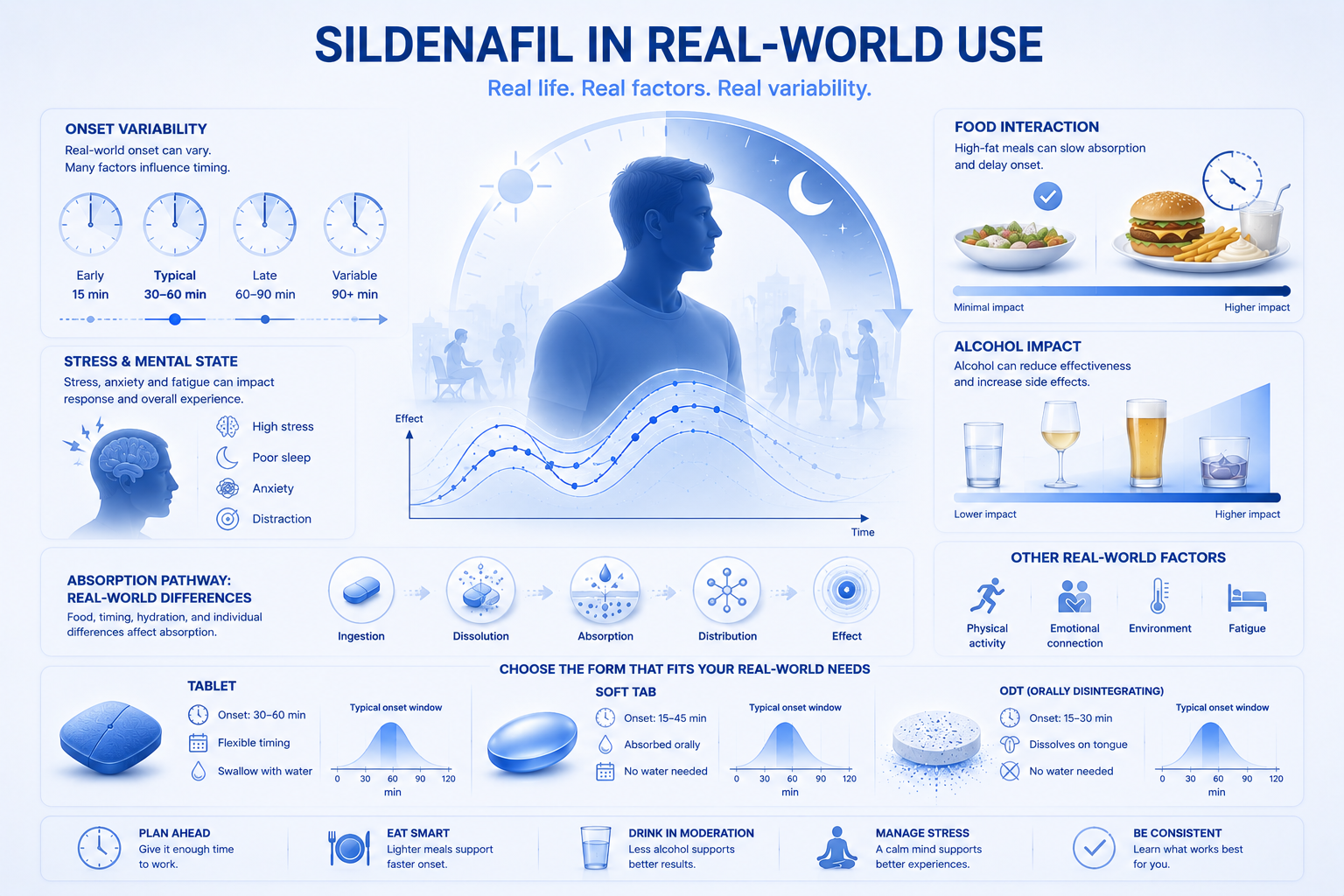
Real‑world sildenafil use often differs from the clean, controlled outcomes seen in clinical studies. Clinical trials operate under standardized conditions, but everyday use involves variables that directly influence absorption, onset, peak activity, and duration. These pharmacokinetic processes are explained further in the Pharmacokinetics section, and they form the foundation for understanding why results vary between individuals and even between doses for the same user.

Timing plays a major role: dosing too early or too late shifts onset away from the moment sexual activity begins. Food intake — especially heavy or high‑fat meals — slows gastric emptying and delays absorption. Alcohol weakens vascular responsiveness, while stress and psychological expectations influence arousal signals that sildenafil depends on. These real‑world factors combine to create a response that is rarely identical from one scenario to another.

Lifestyle patterns also shape consistency. Users who frequently eat late dinners, drink socially, or have irregular schedules often experience more variability. Meanwhile, those who align dosing with planned activity, manage meal timing, and choose the right formulation tend to achieve more predictable results. Understanding these real‑world dynamics helps set realistic expectations and ensures sildenafil performs closer to its optimal potential outside controlled clinical environments.

Typical User Expectations

Many users approach sildenafil with expectations shaped by marketing, anecdotal experiences, or clinical trial summaries. In reality, everyday use behaves differently because absorption, onset, and duration vary with meal timing, stress levels, alcohol intake, and overall physiology. Most expect rapid activation, yet real‑world onset typically falls within the window described in Onset & Duration. Erection quality also depends on adequate stimulation, vascular responsiveness, and psychological comfort, which means results may differ from dose to dose. Duration is generally stable, but lifestyle factors can shorten or extend the perceived effect. Understanding these differences helps align expectations with how sildenafil actually performs outside controlled environments.

Expectations often diverge from reality because users assume the medication works automatically or identically every time. However, food, alcohol, stress, and formulation choice influence consistency. When these variables shift, onset and intensity shift as well. Recognizing this gap between expectation and real‑world pharmacological behavior allows users to plan dosing more effectively and achieve more reliable outcomes.

Expectation Real‑World Outcome Notes
Instant effect Onset 30–60 min Timing matters
Guaranteed erection Requires stimulation Not automatic
Same effect every time Varies with food/alcohol Lifestyle factors

Common Real‑World Scenarios

Real‑world sildenafil use is shaped by everyday habits and situations that influence onset and erection quality. A heavy dinner, especially one high in fat, slows gastric emptying and delays absorption, often pushing onset far beyond the expected window. More detailed dietary interactions are covered in Food Interactions. Alcohol is another major factor: even moderate intake can weaken vascular responsiveness and reduce erection quality, while heavier drinking increases the risk of dizziness and blood‑pressure instability, discussed further in Alcohol.

Stress also plays a significant role. Sildenafil requires adequate psychological and physiological stimulation, and high stress levels can blunt the response even when the medication reaches optimal plasma levels. Form differences matter as well: soft tabs dissolve partially through buccal absorption and often activate faster than tablets, making them more suitable for users who need predictable timing. These scenarios illustrate why real‑world outcomes vary and why understanding context is essential for achieving consistent results.

Scenario Outcome Notes
Heavy meal Delayed onset Food-sensitive
Alcohol Reduced erection quality BP instability
Stress Weaker response Psychological factors
Soft tabs Faster onset Buccal absorption

Why Real‑World Results Vary

Sildenafil’s real‑world variability stems from multiple interacting factors that influence absorption, onset, and vascular response. Food is one of the strongest variables: heavy or high‑fat meals delay gastric emptying and slow absorption, often shifting onset significantly. Alcohol reduces vascular responsiveness and can weaken erection quality even when the drug reaches adequate plasma levels. Timing mistakes—taking the dose too early or too late—cause users to miss the peak window entirely, a topic explored further in Timing Optimization.

Form differences also matter. Tablets rely solely on gastrointestinal absorption, making them more sensitive to food delays, while soft tabs and ODT forms activate faster and more predictably. Dose selection influences intensity but does not eliminate variability. Psychological factors, including stress and performance anxiety, affect arousal signals that sildenafil depends on. Together, these elements explain why results differ between users and between doses, even when the medication itself is working correctly.

Factor Effect Notes
Food Delays onset Fatty meals
Alcohol Reduces effectiveness BP effects
Timing Missed peak Critical factor
Form Onset variability ODT fastest

How Users Optimize Real‑World Use

In real‑world conditions, users often refine how they take sildenafil to achieve more predictable and satisfying results. The most effective strategies focus on timing, meal composition, alcohol intake, formulation choice, and realistic expectations. Correct timing ensures the medication reaches its active phase when sexual activity begins, while avoiding heavy meals prevents delayed absorption. Limiting alcohol helps maintain vascular responsiveness and reduces dizziness or blood‑pressure instability. Faster forms such as soft tabs or ODT provide more reliable onset for users who need tighter timing control. These practical adjustments are explored further in the Maximize Effectiveness section.

Managing expectations also plays a major role. Sildenafil does not produce identical results every time, and small variations in lifestyle, stress, or meal timing can shift onset or intensity. Users who understand these dynamics tend to experience more consistent outcomes because they plan dosing around real‑world conditions rather than idealized assumptions. Together, these strategies help align the medication’s pharmacological behavior with everyday scenarios.

Strategy Benefit Notes
Correct timing Better onset Align with activity
Light meals More predictable onset Avoid fatty food
Limit alcohol Better erection quality BP stability
Use soft tabs/ODT Faster onset Buccal absorption

When Real‑World Problems Indicate a Bigger Issue

Although most sildenafil inconsistencies stem from timing, food intake, alcohol use, or formulation differences, certain patterns suggest a deeper issue that requires attention. Severe delays — such as onset consistently taking far longer than expected — may indicate significant interference from meals, alcohol, or gastrointestinal variability. In some cases, users experience no response despite correct timing and proper use, which may point to underlying vascular or hormonal factors rather than a medication‑related problem. Strong side effects triggered by dosing mistakes, including dizziness or blood‑pressure drops, are also warning signs. More details on adverse reactions are available in the Side Effects and Warnings sections.

When these issues occur repeatedly, adjusting timing or switching to a different formulation may help restore predictable onset. Faster forms such as soft tabs or ODT can bypass some GI‑related delays, while more structured timing strategies reduce variability. However, persistent lack of response or escalating side effects may indicate a medical condition that requires professional evaluation. A healthcare provider can help determine whether sildenafil remains appropriate and whether alternative approaches should be considered.

Frequently Asked Questions

Most users experience a gradual onset of effect rather than an immediate response. Erection quality depends on stimulation, timing, and overall vascular responsiveness. Real‑world use often includes variability caused by meals, alcohol, stress, or inconsistent dosing habits. Some users report strong, predictable results, while others notice fluctuations from dose to dose. These differences are normal and reflect how lifestyle factors influence absorption, onset, and the intensity of sildenafil’s therapeutic effect.

Onset varies because sildenafil’s absorption depends on multiple real‑world factors, including meal timing, metabolic rate, stress levels, and formulation choice. Heavy or high‑fat meals slow gastric emptying, while alcohol weakens vascular response. Even small changes in daily routine can shift onset by several minutes. These variations do not mean the medication is ineffective; they simply reflect how everyday conditions influence the speed at which sildenafil reaches active plasma levels.

Food does not always delay sildenafil, but heavy or high‑fat meals almost always do. Light meals may cause only minor shifts in onset, while heavier meals can significantly slow absorption and push onset far beyond the expected window. The degree of delay depends on meal composition and timing. Although sildenafil still works, users often perceive reduced effectiveness simply because the medication has not yet reached its peak concentration when activity begins.

Alcohol can reduce real‑world effectiveness by weakening vascular responsiveness and interfering with the physiological signals needed for a strong erection. Even moderate drinking may make results feel less consistent, while heavier intake increases the risk of dizziness or blood‑pressure drops. Alcohol does not stop sildenafil from working, but it often blunts the peak effect and makes onset less predictable, especially when combined with large meals or stress.

Stress affects results because sildenafil relies on adequate psychological and physiological stimulation. High stress levels can reduce arousal signals, weaken erection quality, and make the medication feel less effective even when it reaches optimal plasma levels. Stress also influences vascular tone and overall responsiveness. These effects are common in real‑world use and explain why some doses feel stronger or weaker depending on the user’s mental and emotional state at the time.

Soft tabs often work better in real‑world use because they dissolve partially through buccal absorption, allowing faster and more predictable onset. They are less affected by heavy meals and provide more consistent activation for users who need tighter timing control. However, they must be used correctly to achieve these benefits. Swallowing them immediately reduces their advantage, and timing still matters. When used properly, soft tabs can offer a more reliable experience than standard tablets.

Real‑world results can be improved by aligning dosing with planned activity, avoiding heavy meals, limiting alcohol intake, and choosing faster forms when timing is critical. Managing expectations also helps, since sildenafil does not produce identical results every time. Users who understand how food, stress, and daily habits influence onset tend to achieve more consistent outcomes. Small adjustments in routine often make a significant difference in how reliably sildenafil performs.